Vascular Disease

Intestinal Ischemia

Understanding and managing reduced blood flow to the intestine (Mesenteric Ischemia)

Arterial Blood Supply

How do the arteries function in mesenteric ischemia?

The arterial blood supply to the intestine is rich, featuring multiple anastomoses that function as "safety valves," which are activated when the primary supply networks fail or become insufficient. The superior mesenteric artery and the celiac artery are the two main branches that bear the primary burden of blood supply.


Types of Ischemia

Intestinal Ischemia

Just as in the lower limbs, the slower the progression of the stenosis (atherosclerotic plaque), the more time the collateral networks (small arterial branches) have to develop and compensate for the blood supply deficit.

In acute mesenteric ischemia, where the superior mesenteric artery is suddenly occluded, severe abdominal pain occurs. If not treated within hours, this evolves into a life-threatening condition as irreversible damage develops in the small intestine.

Acute Mesenteric Ischemia

In chronic mesenteric ischemia, stenoses and reduced blood supply develop gradually. The patient experiences pain after meals (postprandial pain) when large amounts of blood are required by the intestine for digestion. In advanced stages, the patient may induce vomiting for relief and avoid meals (food fear), leading to progressive weight loss.

Chronic Mesenteric Ischemia

Treatment Options

Specialized Treatment for Mesenteric Ischemia in Vascular Therapy

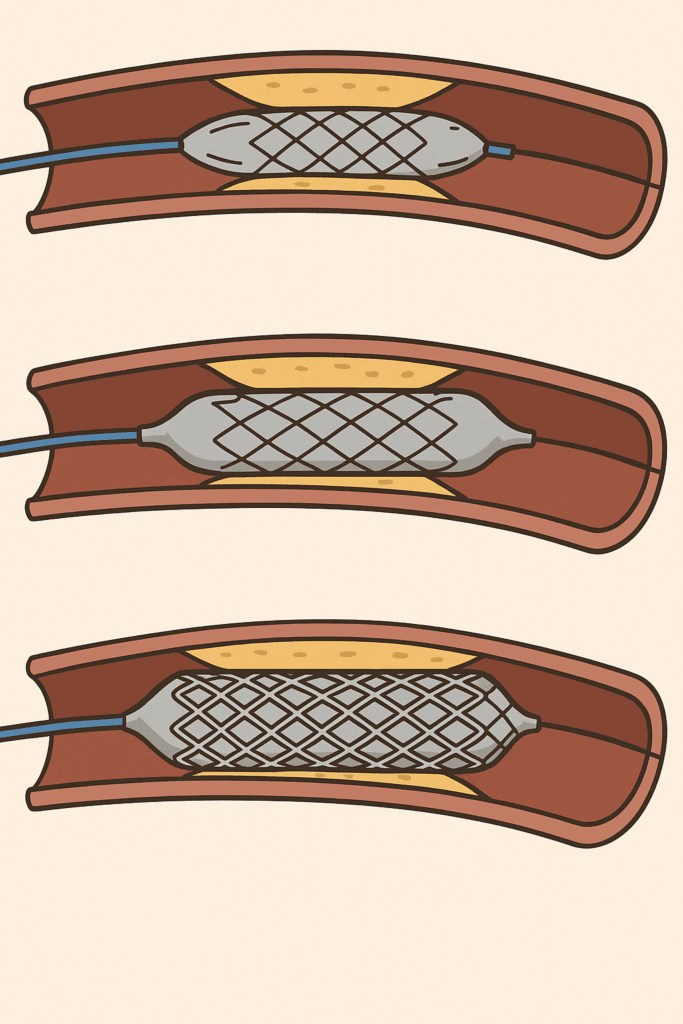
In most cases, acute mesenteric ischemia requires emergency endovascular or surgical revascularization. On the other hand, chronic mesenteric ischemia is more likely to be treated with scheduled, minimally invasive methods (endovascularly with angioplasty/stenting).

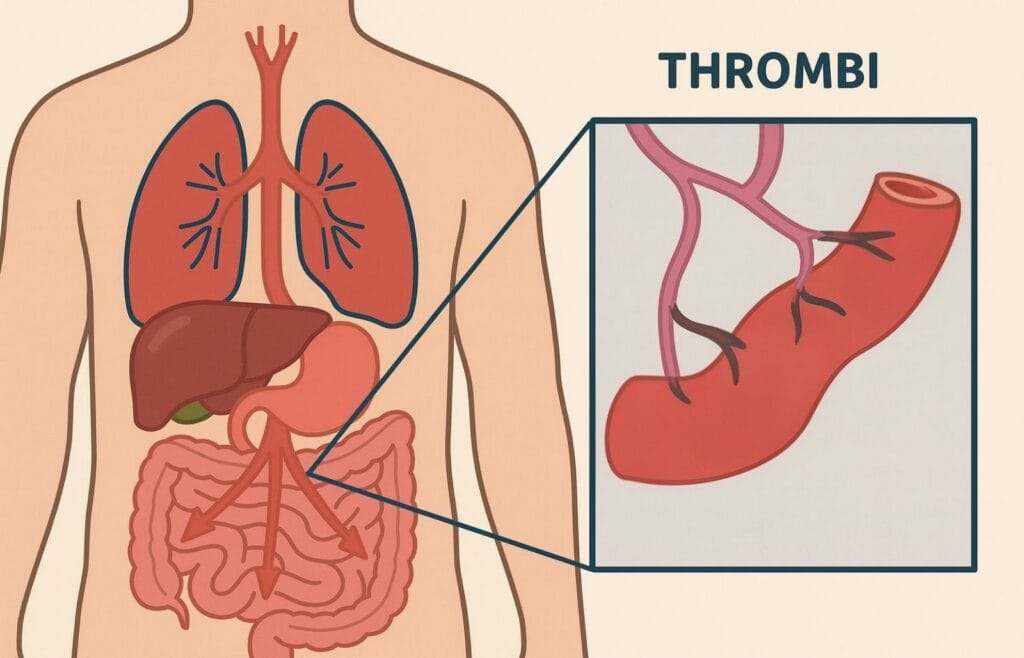
 

Emergency endovascular or surgical revascularization

Acute Ischemia

Scheduled angioplasty and stenting

Chronic Ischemia

Do You Need Specialized Treatment?

Early diagnosis and treatment of mesenteric ischemia are of vital importance. Contact us for a specialized evaluation and treatment plan.