Venous Insufficiency
Understanding vein function and venous insufficiency
Normal Function
Understanding Vein Function
Veins carry blood that is oxygen-poor – after it has been consumed by the organs – from the body back to the heart. This route between the heart and the body is also known as systemic circulation.
Systemic Circulation
Μεταφορά αίματος από το σώμα προς την καρδιά
Pulmonary Circulation
Transport of blood from the heart to the lungs.
Veins have valves that prevent backflow
Pathological Function
Venous Insufficiency: When Veins Do Not Function Adequately
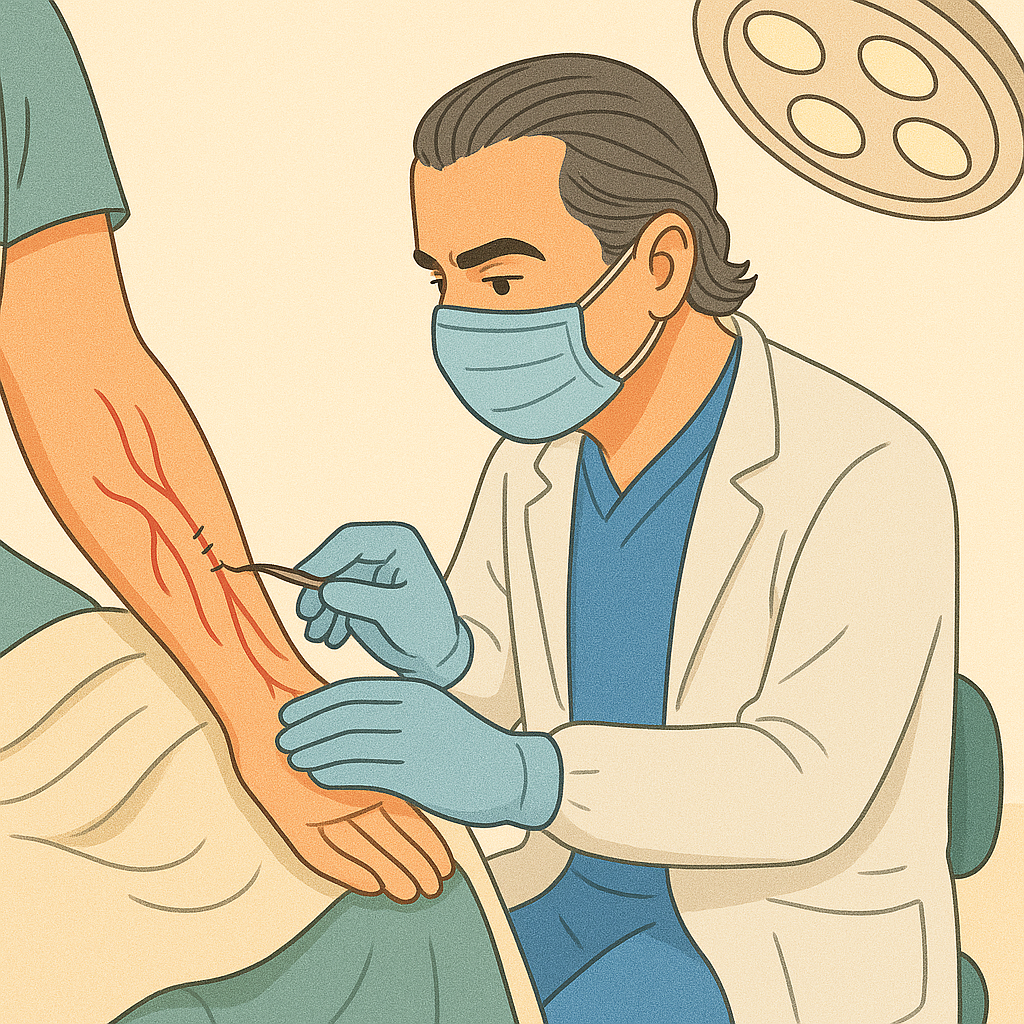
Venous Insufficiency is a condition characterized by reduced venous drainage, where the veins do not function adequately (either due to thrombosis or insufficiency). It is through the veins that venous blood from a body region is drained (removed), which is oxygen-poor and rich in toxic metabolic byproducts.
This condition causes stagnation / venous blood stasis in the affected area, and the symptoms include a feeling of heaviness, edema (swelling), heat, redness, and pain. Additionally, redness and pain occur in the case of a clot, corresponding to the site of the vein where the thrombus is located, which may be palpable like a cord, hardened, and painful.

Early diagnosis and treatment are essential for preventing complications such as skin discolorations, ulcers, and blood clots.
Importance of Early Diagnosis
Symptoms
Heaviness, edema, pain
Complications
Ulcers, thrombosis
What are Varicose Veins?
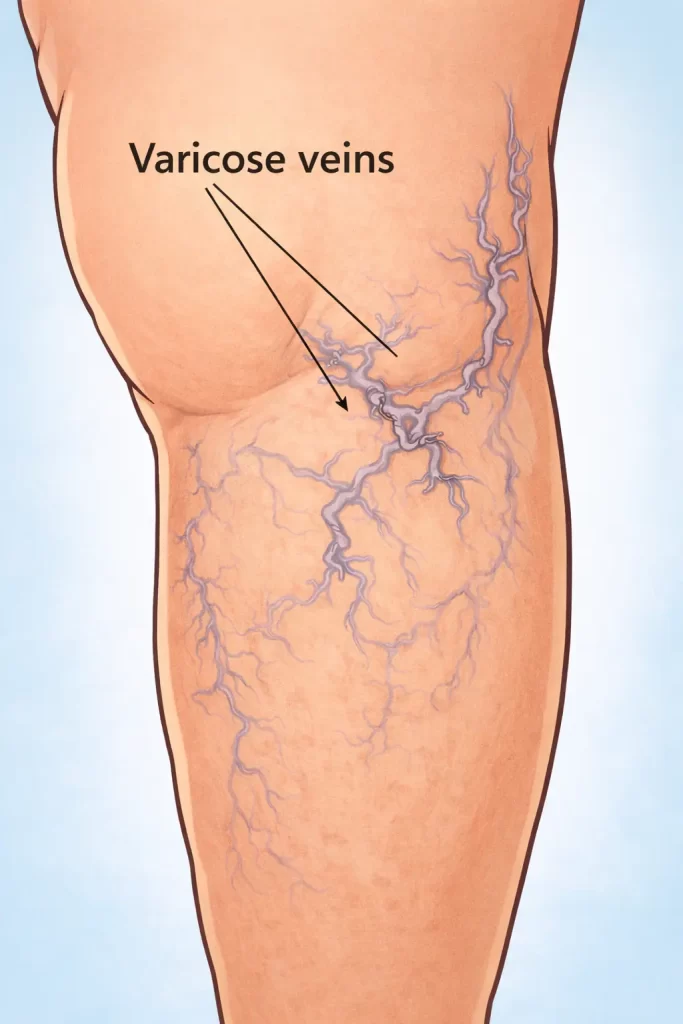
Varicose veins are dilated veins that appear near the surface of the skin, often in the legs and ankles. They affect millions of people worldwide.
Understanding Varicose Veins and Venous Insufficiency
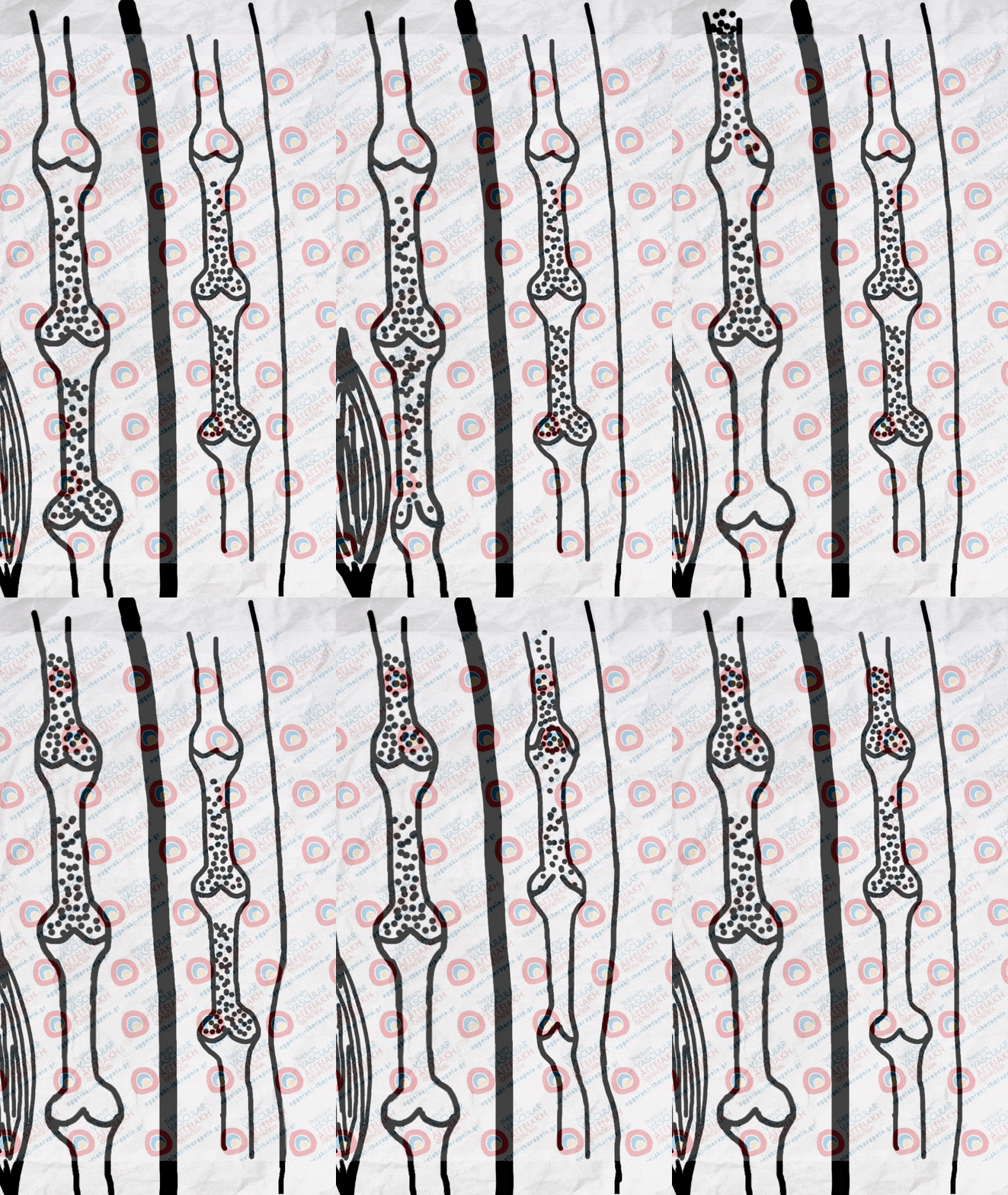
The veins of the lower extremities carry out the task of returning blood from the feet to the heart against gravity, and the energy required for this is provided by the gastrocnemius muscles (calves) when we walk.
Although they are numerous (superficial & deep) and equipped with valves that prevent backward flow, the modern lifestyle (inactivity) hinders their function.
Even though they are very resilient, damage and degeneration of the valves that allow upward flow, combined with modern lifestyles (inactivity), hinder their function.
Venous return to the heart against gravity
Venous Circulation
They prevent the backward flow of blood
Venous Valves
Modern Lifestyle and Venous Health
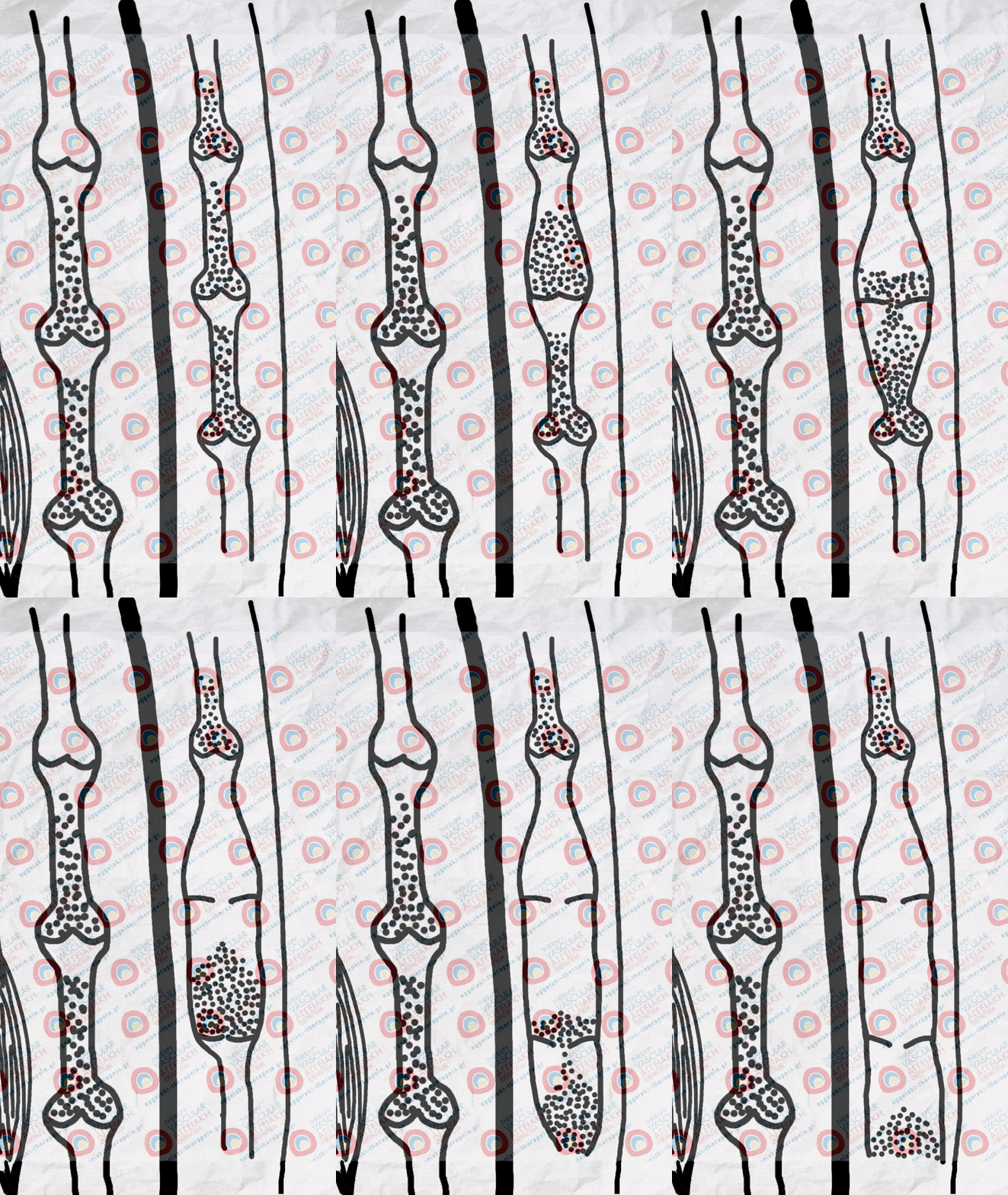
Heredity, unhealthy diet, increased body weight, lack of walking, and prolonged standing lead to permanent damage and dysfunction of the valves (chronic venous insufficiency) and venous stasis, where blood pools in the lower extremities.
The consequence of this is the development of varicose veins, which cause a feeling of fatigue, edema (swelling), and cramps in the leg.
In neglected cases, the skin of the lower legs hardens and turns dark, while eventually, ulcers appear that heal with difficulty. At the same time, the probability of superficial venous thrombosis increases.
Heredity
Genetic predisposition to venous insufficiency
Body Weight
Increased weight puts strain on the veins.
Lack of Walking
Inactivity affects venous circulation.
Prolonged Standing
Prolonged standing worsens the symptoms.
Symptoms of Varicose Veins
- Feeling of fatigue
- Edema (swelling)
- Cramps
Personalized Treatment Solutions
The treatment of the disease is personalized based on the patient's physique and a detailed color ultrasound study – mapping of the type, degree, and source of insufficiency, performed by the treating Vascular Surgeon.
Surgical Methods
- Stripping of the great saphenous vein
Minimally Invasive Methods
- Ultrasound-guided Foam Sclerotherapy
- MechanoChemical Ablation (MOCA)
- Endovenous Laser Ablation (EVLA / EVLT)
- Radiofrequency Ablation (RFA)
- Endovenous Steam Ablation (EVSA)
- Endovenous occlusion with Cyanoacrylate glue
Important Information Regarding Treatment
It is noted that in most cases where minimally invasive ablation methods are applied to the great saphenous vein (Laser, RF, etc.), these involve the segment of the vein from the thigh to just below the knee.
In the same procedures, any co-existing varicose veins with a defined course should be removed through small incisions, depending on their location.
High Success Rates
Success rates are very high.
Short-term Hospitalization
The duration of hospitalization is only a few hours.