Vascular Health

Carotid Stenosis: A Silent Threat

Carotid stenosis is a serious condition affecting the carotid arteries, which supply blood to the brain. The accumulation of plaque in these arteries can lead to a stroke. Early diagnosis and treatment are vital for preventing severe complications.


Arterial Supply

Brain & Blood Supply

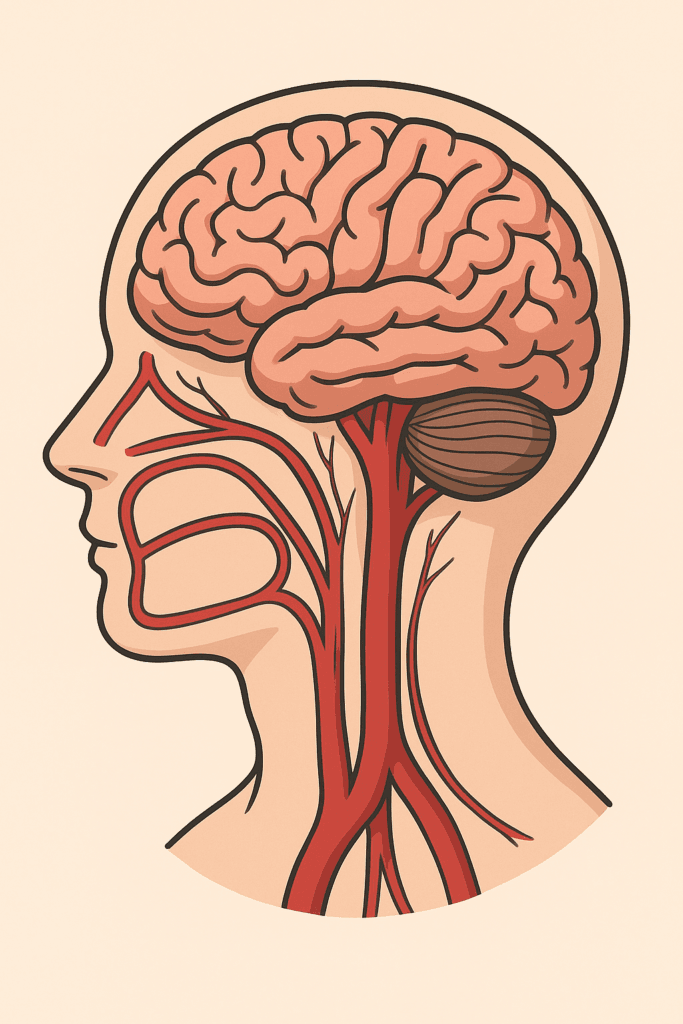
The brain is an organ that is highly sensitive to any reduction in arterial blood supply. This is why it is supplied by four main arteries (2 carotid arteries in the front of the neck and 2 vertebral arteries at the back) which complement each other to ensure constant blood flow.

In the front of the neck

2 Carotid Arteries

In the back of the neck

2 Vertebral Arteries

Atherosclerotic Disease

Atherosclerotic Disease and the Brain

When atherosclerosis affects the arteries supplying the brain, it causes narrowings (stenoses). Once these narrowings exceed a critical threshold, they can create small blood clots (micro-emboli) that travel through the bloodstream and lodge in the brain. This blocks blood flow to specific branches, leading to ischemic strokes.

The most susceptible arteries to this phenomenon are the internal carotid arteries (located in the front of the neck). This is due to their anatomy, which forms a bifurcation (fork). At this "fork," the blood flow becomes turbulent, creating the ideal conditions for the development of atherosclerotic plaques.

Micro-clots can cause strokes

Stroke Risk

Treatment Options

Treatment of Carotid Stenosis

When carotid stenosis has caused a stroke and/or has exceeded a critical degree of narrowing, intervention must be recommended. Treatment involves not only addressing the blockage itself but also modifying medical therapy (adding medications that reduce the blood's ability to form clots) and managing predisposing risk factors (smoking, hyperlipidemia, hypertension).


Carotid Endarterectomy – Surgical removal of the atherosclerotic plaque from the carotid artery.

Classic Procedure

Minimally invasive method with angioplasty and stenting under filter protection.

Endovascular Repair

Depending on the preoperative imaging findings, as well as the patient's clinical presentation and overall condition, carotid stenosis is treated in our Clinic either with the classic carotid endarterectomy procedure or with minimally invasive endovascular restoration using angioplasty and stent placement under filter protection.

Personalized Approach

Medications that reduce clot formation

Medical Treatment

Smoking Cessation, Lipid and Blood Pressure Control

Risk Factor Modification

Reducing the Risk of Stroke

Prevention of Complications