

Vascular Diseases: Learn the Basics
Understand the vascular system and the main types of vascular disease.
The Circulatory System
Vascular Diseases: Learn the Basics
The human body is dominated by a complex system of tubes (vessels) – also known as the circulatory system – through which blood constantly circulates. The role of blood is the transport of "fuel" (nutrients), oxygen necessary for converting fuel into energy (measured in calories), and combustion byproducts (metabolites) to be eliminated.
Blood vessels are divided into (A) arteries (which carry oxygen-rich blood from the heart to the body under pressure equal to the arterial pressure measured with a blood pressure monitor), and (B) veins (which carry oxygen-poor blood – after it has been used by the organs – from the body back to the heart). This pathway between the heart and the body is also known as the systemic circulation.
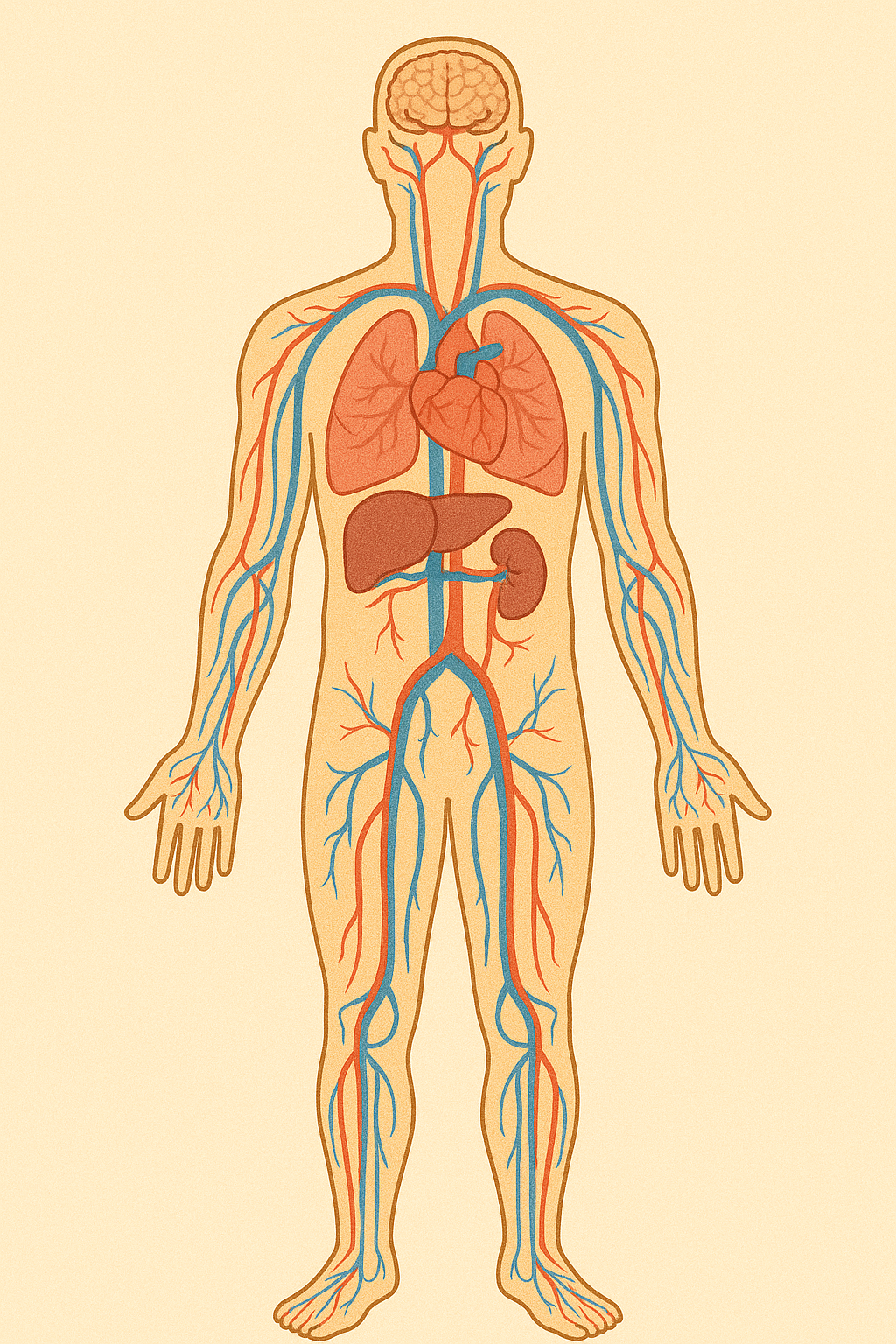
Systemic Circulation
The route between the heart and the body where blood transports oxygen and nutrients.
Pulmonary Circulation
The route between the heart and the lungs, where blood is enriched with fresh oxygen and eliminates carbon dioxide.
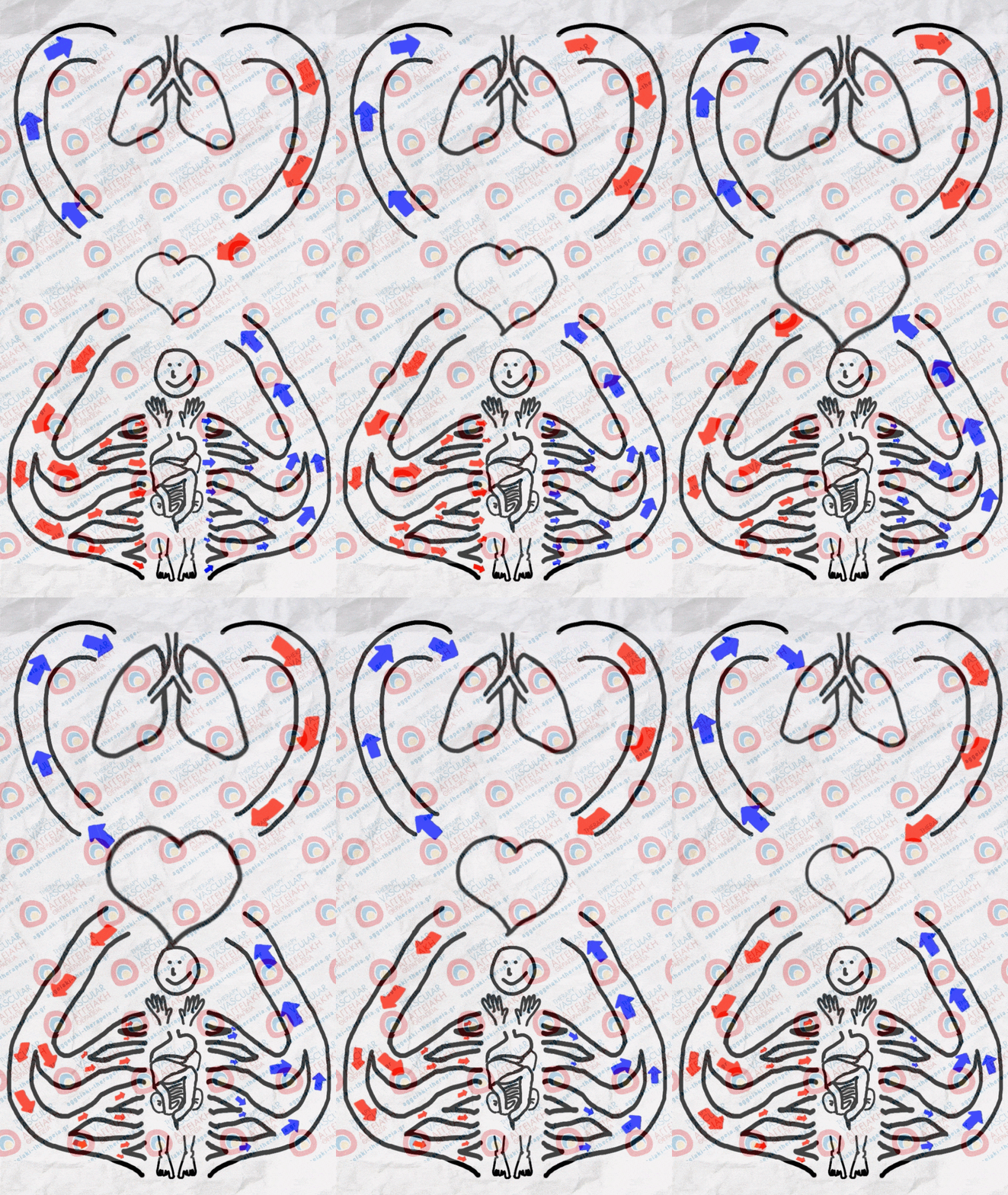
How Blood Circulation Works
The heart, in turn, sends the oxygen-poor venous blood to the lungs, where it is re-enriched with oxygen and gaseous waste products are eliminated. Finally, the oxygen-enriched blood returns from the lungs to the heart to continue its journey through the body. This shorter route is known as pulmonary circulation.
Arteries
Oxygen-rich
Veins
Oxygen-poor
Coagulation Mechanism
The Role of the Coagulation Mechanism
The blood clotting mechanism, through the formation of a thrombus (solid blood), ensures the integrity of blood vessels by preventing and limiting bleeding.
The coagulation mechanism is activated in 3 main cases (Virchow's triad, as he was the first to describe it):
Virchow's triad
Low Flow
Low blood flow
Vessel Damage
Damage to the blood vessels
Hyperactivity
Hyperactivity of the coagulation mechanism
In many cases, patients who experience repeated thrombotic episodes or have relatives with a history of thrombosis are found, after genetic testing, to have a hereditary overactivity of the clotting mechanism (Thrombophilia) and should be protected with anticoagulant therapy.
Thrombophilia
The Circulatory System
Vascular Disease
Vascular disease occurs in three main forms, while it is also possible for combinations of two or three forms to coexist simultaneously in the same disease or patient:
1. Reduced Arterial Supply (Ischemia)
Reduced arterial supply (ischemia) occurs when the arteries providing blood to a specific area of the body do not function adequately, leading to a decrease in arterial blood flow and, consequently, a reduction in both oxygen and energy in that specific region.
The symptoms experienced by the patient are due to the dysfunction of this area and become more intense as the amount of blood reaching the tissues decreases. The damage caused by the lack of blood to the tissues of the affected region may or may not be permanent, depending on the sensitivity of each area to oxygen deprivation (nervous tissue, and specifically the brain, is the most sensitive) as well as the duration of blood (oxygen) deprivation in that specific area.
2. Reduced Venous Drainage (Venous Stasis)
Reduced venous drainage (venous stasis) occurs when the veins, through which blood flows away from a body region (blood that is oxygen-poor and rich in toxic metabolic byproducts), do not function adequately (either due to thrombosis or insufficiency).
Αυτή η κατάσταση προκαλεί παραμονή / στάση φλεβικού αίματος στη πάσχουσα περιοχή και τα συμπτώματα είναι αίσθημα βάρους, οίδημα (πρήξιμο), θερμότητα, ερυθρότητα και πόνος. Επιπλέον ερυθρότητα και πόνος προκαλείται στη περίπτωση του θρόμβου και αντίστοιχα με το σημείο της φλέβας όπου βρίσκεται ο θρόμβος το οποίο μπορεί να ψηλαφητό σαν κορδόνι, υπόσκληρο και επώδυνο.
3. Vascular Wall Rupture and Hemorrhage
Ρήξη αγγειακού τοιχώματος και Αιμορραγία (απώλεια αίματος) όπου η αρτηρία ή η φλέβα υπόκειται ρήξη ή διάβρωση από παθολογικά ή τραυματικά αίτια (π.χ. ρήξη ανευρύσματος) και το αίμα εξέρχεται από τη κυκλοφορία των αγγείων είτε εντός είτε εκτός του σώματος. Όταν η αιμορραγία προέρχεται από αρτηρίες – οι οποίες μεταφέρουν αίμα με πίεση μεγαλύτερη από εκείνη των φλεβών – η απώλεια αίματος είναι πιο επικίνδυνη από τη φλεβική αιμορραγία και αν δεν αντιμετωπιστεί έγκαιρα μπορεί να απειλήσει και τη ζωή του ασθενούς.
Need Help ?
Contact us for more information about vascular conditions and the available treatments